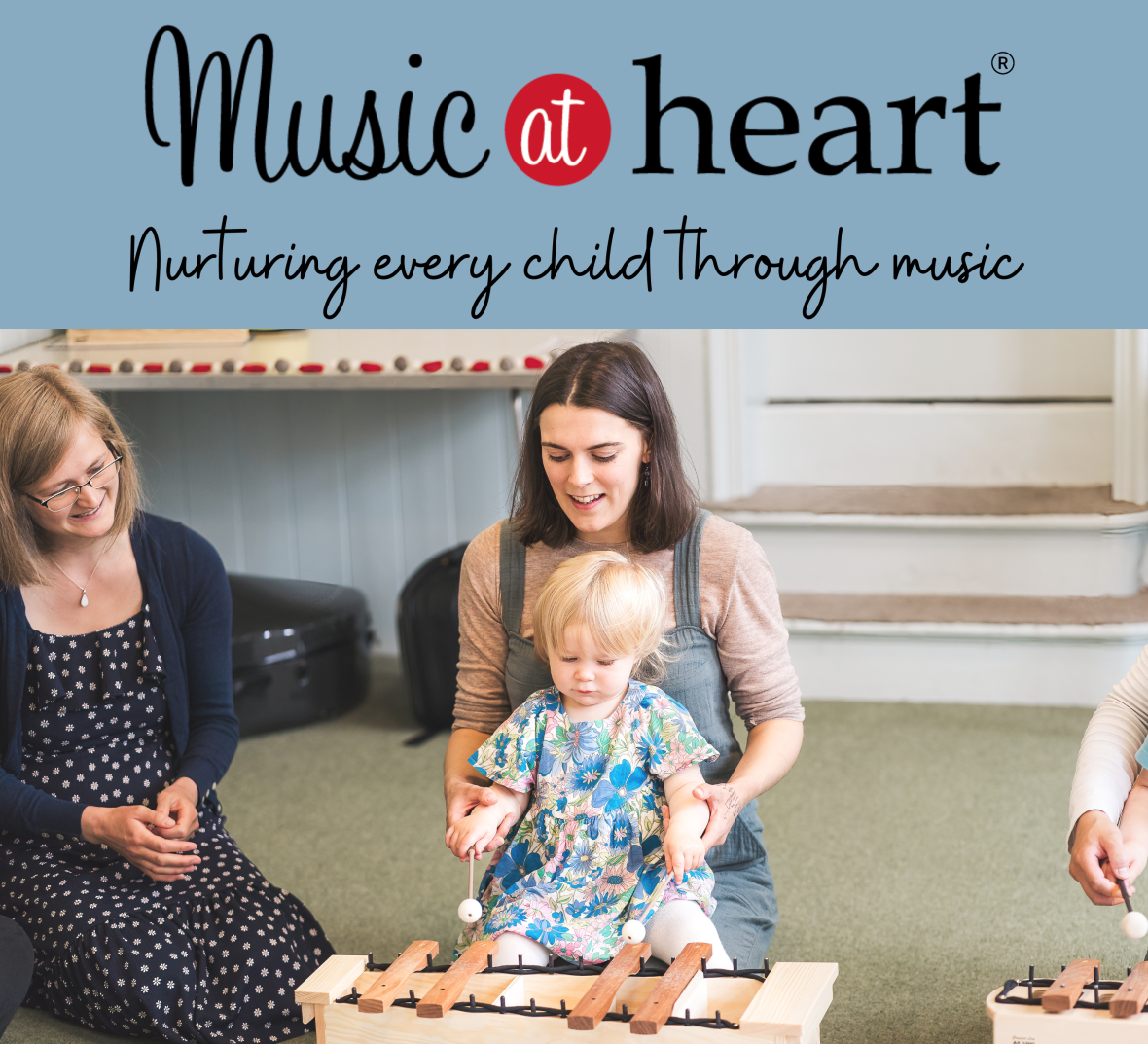
There is so much evidence to show that music in the first years of your child´s life will positively support and advance their development. I have compiled some links where you can see just a small amount of the huge scope of research done into this field, and summarised some of the key findings alongside.
https://novakdjokovicfoundation.org/importance-music-early-childhood-development/
Click to access pdf-for-website.pdf
https://www.gov.uk/government/publications/research-review-series-music/research-review-series-music
https://www.eyalliance.org.uk/music-and-movement-encouraging-physical-activity
https://www.carnegiehall.org/Explore/Articles/2020/12/09/Why-Making-Music-Matters
Why the Kodály Approach?
I believe that the Kodály Approach is the most accessible and child-friendly model for a music curriculum at pre school and EYFS stage. Kodály work focuses on engaging children in enjoyable, practical, carefully structured musical activity relevant to their physical, intellectual and emotional stage of development. This builds up a bank of memorable repertoire, which roots children’s understanding in real experience, and becomes a seedbed for future musical growth.
Recipe for success with young children
Kodály teachers start from the premise that everyone can learn to sing. Most young children have a limited singing range of about a musical sixth (from about Middle D to the B above). Best results are achieved by beginning with songs of limited range, starting from the simple “coo-ee” or “cuckoo” singing pitches (the solfa pitches so and mi) that children – and adults – spontaneously use in calling to each other. The universally known playground chants, Rain, rain, go away, Ring-a-roses, It’s raining, it’s pouring and Mary had a little lamb, are examples of songs which young children can successfully cope with as a first diet. There is no shortage of good repertoire. The teacher also chooses a comfortable starting pitch, ensuring that the song fits within the children’s range.
Songs are taught by rote from the teacher’s unaccompanied singing voice. Children hear only the sounds they need to imitate, uncluttered by the different timbre of a piano or other distracting accompanying instrument, or the insistent drum rhythms of modern backing music. Songs are repetitive, rhythmically simple, and easily memorised. Many repetitions, both on first exposure and on subsequent hearing, ensure accurate internalising of pitches, rhythms and words. Daily singing is the best approach, even if only for 10 minutes. once memorised, songs provide core material with which other music skills are developed.
Variety is achieved by adding accompanying actions performed on the pulse or on cue words, appropriate to the song content. Actions focus and engage the whole attention, and fix the song and its essential mood and components more firmly in the memory by anchoring the experience in different parts of the body. Pulse actions programme in from the word “go” that essential component of music, its steady beat. Cue word actionsare one of the first stages in rhythmic awareness. Numbers, names and animal noises are the most obvious starting point in early years repertoire. Towards age 5, as the child grows in musical experience, he or she learns to clap the rhythm (word pattern) of whole lines of well-known songs and rhymes.
Body actions develop co-ordination: this is where children and teachers can have a lot of fun! It also lays important foundations for a skill which musicians need in abundance, the ability to deal with several things simultaneously. Once a body action is established with any new song, it can be transferred to a percussion instrument. Children take turns to accompany the song with instruments such as claves, finger cymbals or jingle bells.
A well-developed memory is the key to any successful learning, and listening and concentration are essential to this. Kodály teachers make creative use of external stimuli to harness the imagination. The passing seasons, festivals and visits are an obvious source of inspiration for repertoire. Puppets, pictures and favourite storybooks or nursery rhyme books can be woven into music lessons to attract, focus and extend children’s attention.
What is good repertoire?
In considering repertoire appropriate for teaching, Kodály said, “only the best is good enough”. Young children actively experiencing good quality music unconsciously absorb good musical vocabulary. This influences their musical development and choices for the rest of their lives. Kodály believed teachers should look to the indigenous folk repertoire of their native country and traditions, and draw inspiration and material from there. These songs and rhymes have stood the test of time. Their essential elements are building blocks for all musical experience and understanding.
This does not mean that all our most popular Nursery Rhymes are suitable for a structured programme of early years music training through singing: far from it! Many of the best-known British tunes are in fact settings of traditional rhymes with melodies composed for the Victorian nursery. Sing the following aloud, and appreciate the inherent difficulties:
- Humpty Dumpty
high at the end - Jack and Jill
impossibly low at the end - Ride-a-Cock Horse to Banbury Cross
wide range, huge melodic leaps, no melodic repetitions - Hey Diddle Diddle
no melodic repetitions, some difficult rhythms - Hickory Dickory Dock
tricky word-setting in second line (one-syllable words on two rising notes), low at the end. - I Had a Little Nut-tree
wide range, awkward melodic shape
Surprisingly, even contemporary early years song repertoire, including that specially compiled or composed, frequently contains similar difficulties, or is set in keys too high to suit the singing range of a typical 4-year-old. Although some young children have amazingly high, agile singing voices, and big vocal ranges, this is not the norm. Most need a diet of carefully selected material, starting from limited range, gradually extending the boundaries as singing skills develop. Kodály teachers look analytically at songs, and are concerned with planning programmes where material is introduced systematically, allowing learning to occur cumulatively. The success following this approach is self-evident.
Kodály programmes at the early years stage make particular use of singing games. These are part of folk tradition, and children learn them as easily and naturally as they learn to speak their mother tongue. Singing games, usually in circle formation, give opportunities for social interactions such as turn taking, choosing partners, or role-play. Games help to develop essential skills such as listening, concentration, memory and co ordination, in an enjoyable and emotionally satisfying way. Children perform musical actions as a group, according to the rules of the game, walking skipping or clapping to the steady beat, taking turns as the leader or soloist. They learn unconsciously and spontaneously through being actively involved in a structured play situation.
And those tricky Nursery Rhymes? Kodály teachers often use them in their original form as rhymes. Awareness of words is one of the earliest stages of rhythmic training. With their straightforward metre and rhythm, rhymes provide valuable material for rhythm work, and later improvisation and composition. The teacher chants with exaggerated intonation and mouth movements, focusing attention o¬n the individual syllables, the rhythm pattern, and the balance of each line. Children unconsciously absorb the natural metre and word pattern, as well as the form and structure of music inherent in the rhyme. This kind of activity undoubtedly aids speech and language development.
 Music at Heart