History
The educational work of Zoltán Kodály (pronounced koh-da-yee) was driven by his overriding belief that “music belongs to everybody”; that active participation in music-making develops a person on all levels and that the best approach is through the instrument accessible to all – the human voice.
Music belongs to everybody
His ideas evolved into a philosophy of music education based on the way that children learn most naturally: through singing games, fun and play. Through his vitality and research, and the work of his colleagues and students, a sequential and progressive approach to teaching music was implemented in schools throughout Hungary based on an integration of the best practices observed throughout Europe.
Kodály believed that music education should begin as early as possible, that highly trained teachers were essential, especially in the early years, and that the rhymes and songs used should be of the best quality starting with familiar children’s songs and simple mother-tongue folk songs.
A well-trained ear, a well-trained mind, a well-trained heart and well-trained fingers
The 21st century sees Kodály’s principles at the heart of music education in many countries throughout the world, adapted whilst remaining true to the core tenets of the concept. It is a complete and comprehensive approach that covers every requirement of the music curriculum – and so much more!
Kodály at Music at Heart
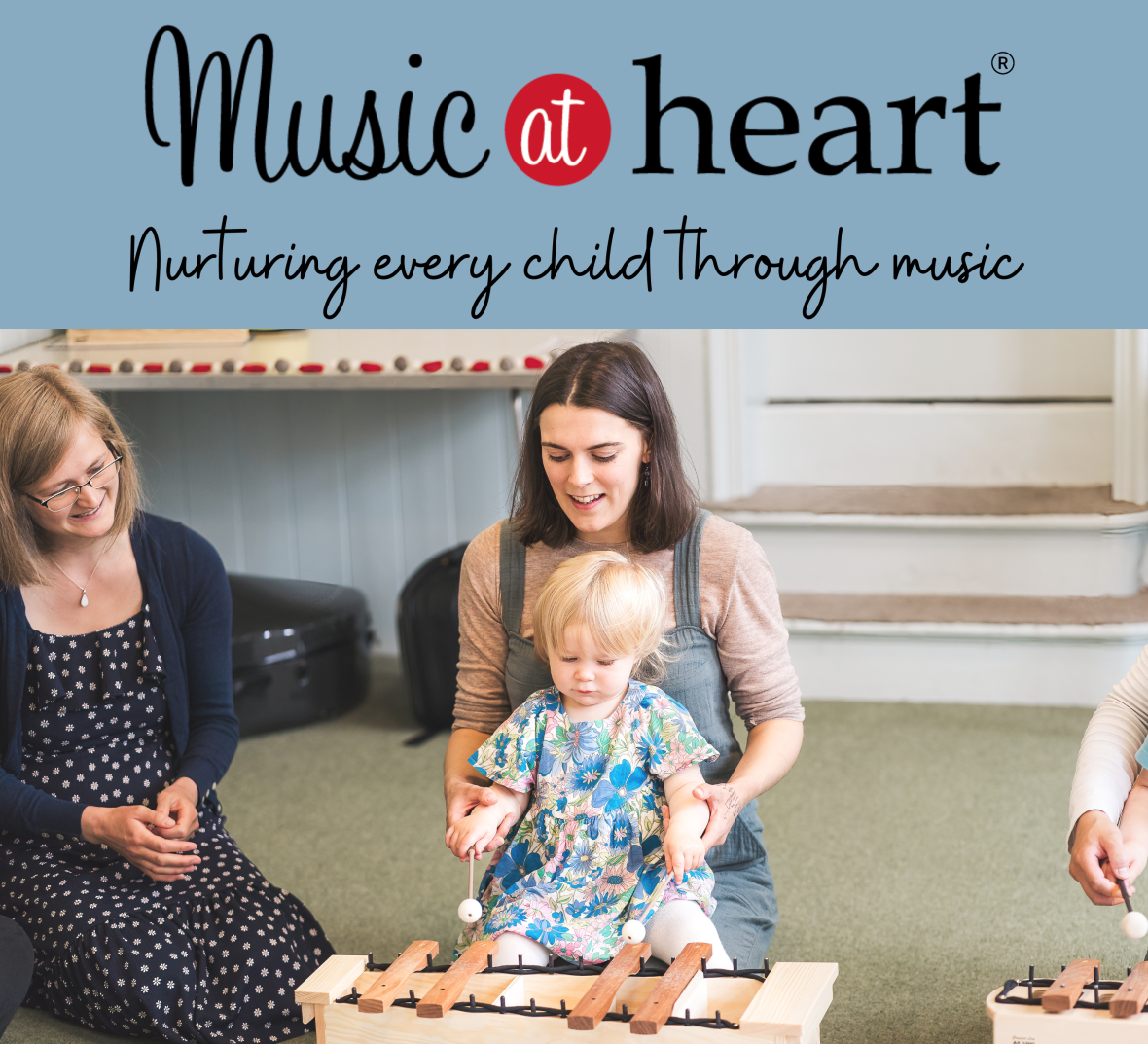
At Music at Heart, Caitlin designs the Pre-School and Early Years Curriculum based upon core principles of the Kodály approach. In classes for children and babies aged 0-7, you will notice the following elements of Kodály pedagogy in practice:
- Repetition of many short, familiar songs. Children will often ask for the same story before bed; in the same way, they are most confident and show the most development when singing songs they know really well. Repetition and structure help children and babies feel safe and held in familiarity, and enables them to become experts in music. Deep learning also happens slowly, after lots and lots of practice.
- Music is learned like a mother tongue language. Just as children and babies learn to talk by listening and copying their parents, music is ´caught not taught´ at Music at Heart through playing singing games. Songs and games are initially adult-led and children eventually join in when they are ready, and with lots of encouragement and praise from their parent.
- Environment nurtures growth. My aim is to create a nurturing musical environment where children can develop at their own pace, gradually absorbing music . Older children in KS1 often experience a ´lightbulb moment´ of deep understanding after weeks or months of music lessons, when they discover a key musical concept for themselves; child-led learning through personal discovery gives children ownership and confidence.
- Use of quality musical resources and folk songs. I carefully select repertoire based on its musical potential, rather than to fit with a theme like so many other music groups. This enables children to experience the songs in a much deeper way and, when they are ready, they can eventually perform familiar songs as a soloist, play them on various instruments, experience the music in their ´thinking voice´, improvise and perform in multiple parts.
- Age-appropriate singing. Kodály training develops musicianship primarily through singing, so the majority of the sessions are sung with talking kept to a minimum. Use of short, sung musical commands e.g. ´stand up´ (ending on a high pitch) and ´sit down´ (ending on a low pitch) help train the ear and keeps the pace of the session engaging.
- Musical sign language. I use solfa and curwen hand signs for a visual representation of pitch, as both a crutch to help understanding and a tool that can be used to challenge older children to hear with their inner ear, compose and explore basic transposition using the voice and instruments.
- Music-making is always FUN! No child is ever put under pressure to perform, and can decide to join in whenever they are ready. I don´t set specific goals that must be achieved by the end of any class; my main goal is the bigger picture – giving your child a lifelong love of music which is rooted in joy, self-belief and creative exploration without judgement. Kodály teachers know they may never see the true fruits of their labours, but I hope over time you as parents will come to see how a love of music nurtures your child in so many deeper ways.
 Music at Heart